
What Is the Role of Artificial Intelligence in Autism Today?
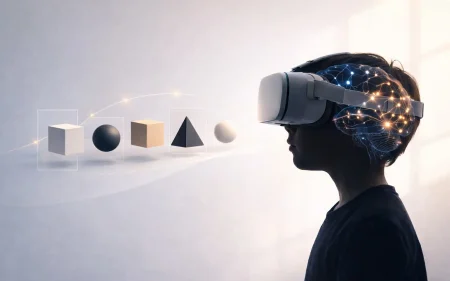
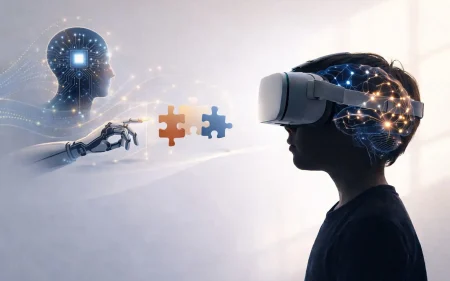
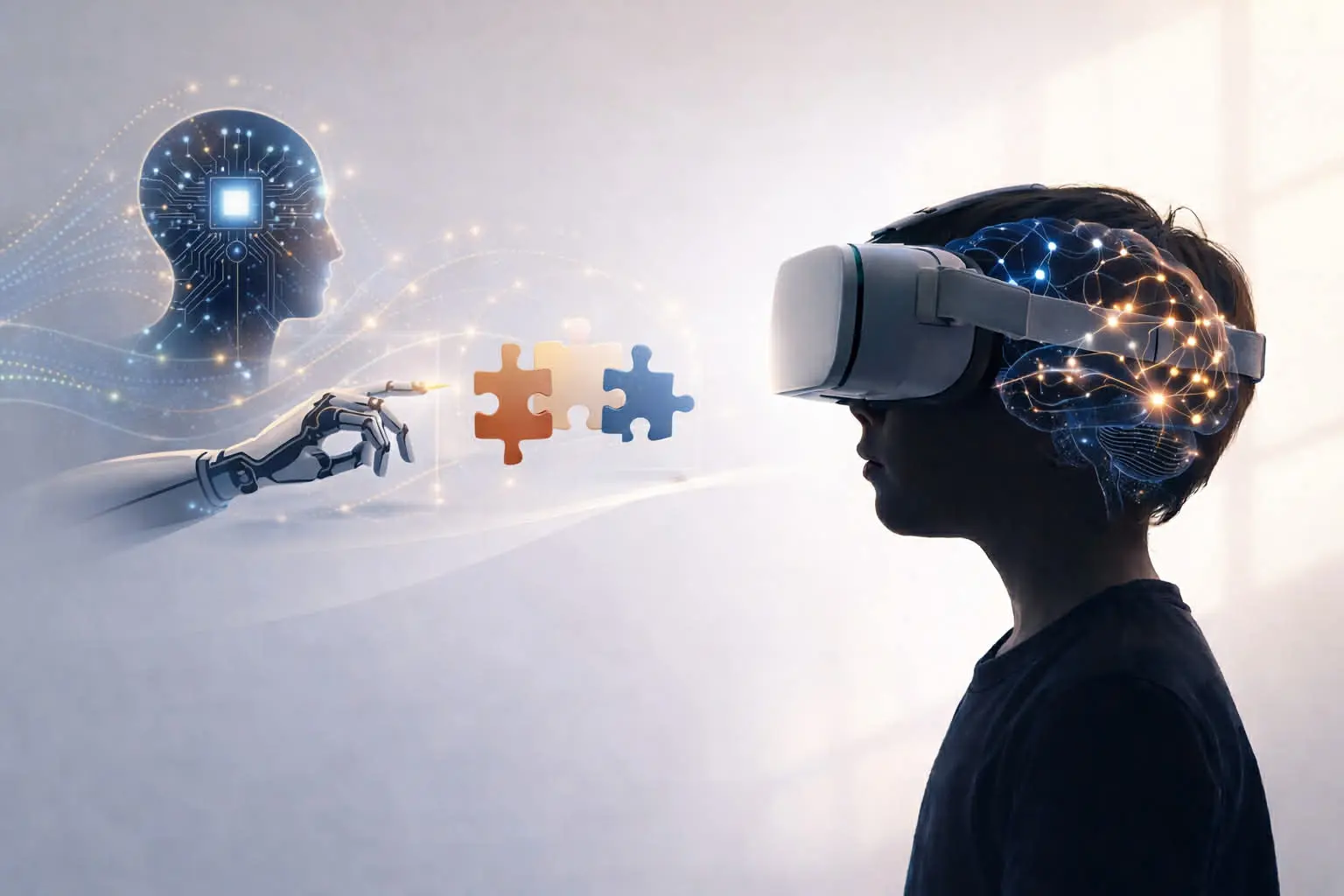
Artificial Intelligence (AI) is rapidly reshaping the way autism is understood and supported. In recent years, it has moved beyond simple digital tools and is now becoming an active part of diagnosis, therapy, and everyday intervention for individuals with Autism Spectrum Disorder (ASD).
Unlike traditional approaches, AI systems can analyze complex behavioral patterns in real time. This allows professionals to move from general observations to highly personalized insights. As a result, children and adolescents with autism can now receive support that is more precise, adaptive, and aligned with their individual needs.
AI in Autism Diagnosis: Faster, More Accurate Detection
One of the most important applications of AI in autism is early detection and diagnosis. Machine learning algorithms can process large datasets, including behavioral responses, speech patterns, and even neuroimaging signals.
These systems are capable of identifying subtle indicators that may not be easily visible during standard clinical evaluation. Research shows that AI can support earlier and more accurate identification of autism by analyzing complex patterns across multiple variables .
Early detection is critical. The sooner autism is identified, the sooner intervention can begin, leading to significantly better developmental outcomes.
Personalized Intervention: How AI Adapts to Each Child
A key advantage of artificial intelligence is its ability to personalize intervention. Traditional therapy often follows structured protocols. AI, however, can adjust in real time.
For example, AI-based systems can:
- Adapt difficulty levels based on performance
- Modify stimuli depending on attention and engagement
- Provide immediate and tailored feedback
This creates a dynamic learning environment where the child is neither overwhelmed nor under-stimulated. From a neuropsychological perspective, this aligns with how the brain learns best—through gradual, adaptive challenges.
AI and Social Skills: Supporting Communication and Interaction
Many individuals with autism experience challenges in recognizing social cues such as facial expressions, tone of voice, and body language. Artificial intelligence can act as an intermediary system that simplifies these complex signals.
AI tools can:
- Break down emotional expressions into clear patterns
- Guide responses during social interactions
- Provide structured practice in safe environments
This does not replace human interaction. Instead, it prepares the individual for it, building confidence step by step.
Predictive AI: A New Era of Early Support
One of the most innovative aspects of AI is its predictive capability. By continuously analyzing behavioral data, AI systems can detect early changes in patterns such as:
- Attention
- Emotional responses
- Engagement levels
This allows therapists and caregivers to intervene before difficulties escalate. In this way, AI shifts autism support from reactive to proactive.
AI in Everyday Life: Beyond Therapy
Artificial intelligence is not limited to clinical settings. It is increasingly integrated into everyday tools such as:
- Mobile applications
- Wearable devices
- Interactive platforms
These technologies support independence by helping individuals navigate daily routines, communication, and decision-making.
AI is gradually becoming part of a broader ecosystem that connects therapy, education, and real-life environments.
Ethical Considerations: Why Human Presence Still Matters
Despite its advantages, AI cannot replace human connection. Autism support requires empathy, understanding, and emotional attunement—elements that technology cannot fully replicate.
The goal is not to replace therapists or caregivers, but to enhance their work. AI should be seen as a supportive tool, not a substitute.
Additionally, ethical design is essential. AI systems must:
- Respect individual differences
- Avoid over-standardization
- Support autonomy rather than control
The Future of AI in Autism
Artificial intelligence is redefining how autism is approached. It offers new ways to understand behavior, personalize intervention, and support development.
More importantly, it shifts the perspective. Autism is no longer viewed only as a deficit, but as a different way of processing information—one that can be supported through intelligent, adaptive systems.
As AI continues to evolve, its role will become even more integrated into therapy, education, and everyday life. The challenge moving forward is to use this technology responsibly, ensuring that it enhances—not replaces—the human experience.
References
Sideraki, A., & Drigas, A. (2021). Artificial intelligence (AI) in autism. Technium Social Sciences Journal, 26, 262–277. https://doi.org/10.47577/tssj.v26i1.5208
Sideraki, A., & Anagnostopoulos, C.-N. (2026). Virtual reality interventions for enhancing executive functions in children and adolescents with autism spectrum disorder. Algorithms, 19(3), 201. https://doi.org/10.3390/a19030201
Li, C., Belter, M., Liu, J., & Lukosch, H. (2023). Immersive virtual reality enabled interventions for autism spectrum disorder: A systematic review and meta-analysis. Electronics, 12(11), 2497. https://doi.org/10.3390/electronics12112497
Borgnis, F., Baglio, F., Pedroli, E., Rossetto, F., Uccellatore, L., Oliveira, J. A. G., Riva, G., & Cipresso, P. (2022). Available virtual reality-based tools for executive functions: A systematic review. Frontiers in Psychology, 13, 833136. https://doi.org/10.3389/fpsyg.2022.833136
Didehbani, N., Allen, T., Kandalaft, M., Krawczyk, D., & Chapman, S. (2016). Virtual reality social cognition training for children with high functioning autism. Computers in Human Behavior, 62, 703–711. https://doi.org/10.1016/j.chb.2016.04.033
Kandalaft, M. R., Didehbani, N., Krawczyk, D. C., Allen, T. T., & Chapman, S. B. (2013). Virtual reality social cognition training for young adults with high-functioning autism. Journal of Autism and Developmental Disorders, 43(1), 34–44. https://doi.org/10.1007/s10803-012-1544-6
Bozgeyikli, L., Raij, A., Katkoori, S., & Alqasemi, R. (2018). A survey on virtual reality for individuals with autism spectrum disorder: Design considerations. IEEE Transactions on Learning Technologies, 11(2), 133–151. https://doi.org/10.1109/TLT.2017.2739745 Diamond, A. (2013). Executive functions. Annual Review of Psychology, 64, 135–168. https://doi.org/10.1146/annurev-psych-113011-143750