
A Neuropsychological Perspective on Development, Intervention, and Emotional Intelligence
Autism Spectrum Disorder (ASD) is not a single, uniform condition. It is a complex neurodevelopmental profile that affects how a person perceives the world, processes information, and interacts with others. Although the term “autism” is widely used today, what it actually describes is a spectrum—a wide range of experiences, abilities, and challenges that vary significantly from one individual to another.
From a neuropsychological perspective, autism primarily affects three core domains: social interaction, communication, and behavior. These differences are not simply behavioral choices; they are rooted in how the brain develops and functions.
🧬 What Causes Autism?
There is no single cause of autism. Instead, research consistently points to a combination of genetic and neurobiological factors.
Studies suggest that autism is highly heritable. Multiple genes are involved, each contributing a small effect. Rather than one “autism gene,” it is the interaction of many genetic variations that influences brain development. These genetic factors affect how neurons form connections, how networks are organized, and how information is processed across brain regions.
At the same time, environmental factors during early development—such as prenatal conditions—may also play a role, although they do not act independently from genetics.
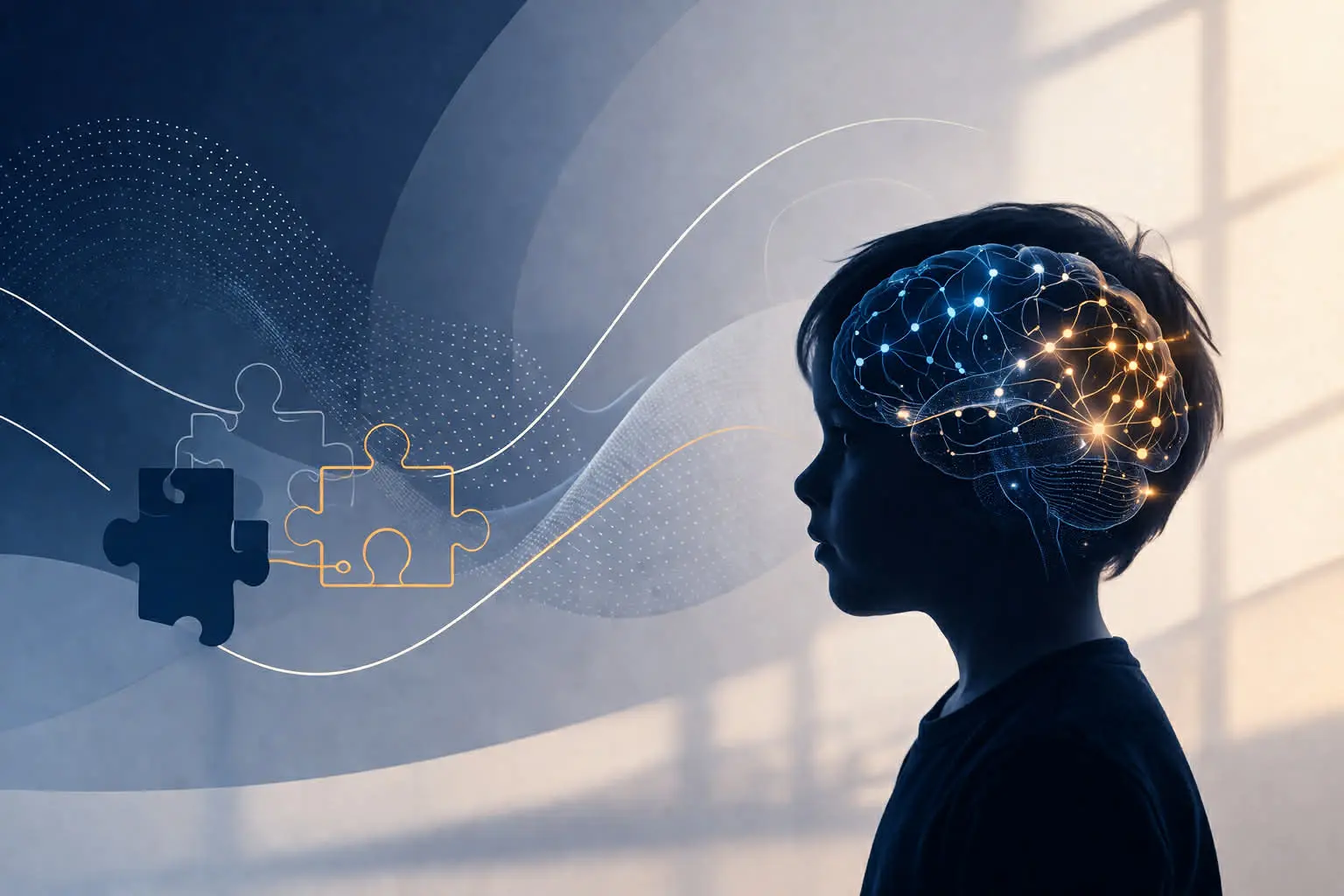
From a brain-based perspective, autism is associated with differences in neural connectivity. Some areas of the brain may be over-connected, while others show reduced connectivity. This imbalance affects how efficiently information is integrated, particularly in complex social and emotional contexts.
🧩 Core Characteristics and Symptoms
Autism typically becomes apparent in early childhood, often before the age of three. However, its expression varies widely.
Some of the most common characteristics include:
- Difficulty in social interaction, such as limited eye contact or reduced understanding of social cues
- Differences in communication, ranging from delayed speech to highly developed but atypical language use
- Repetitive behaviors or strong preference for routines
- Intense focus on specific interests
- Sensory sensitivities (to sounds, textures, or visual stimuli)
These features are not random. They reflect underlying differences in how the brain organizes attention, processes stimuli, and regulates behavior.
One particularly important area is executive functioning. Many individuals with autism experience challenges in cognitive flexibility, planning, and impulse control—skills that are essential for adapting to everyday situations.
🧠 The Brain and Behavior Connection
Neuropsychological research highlights the role of the frontal cortex and related neural systems in autism. These areas are responsible for regulating behavior, initiating actions, and maintaining goal-directed activity.
When these systems do not function optimally, the result is often what we observe behaviorally:
- rigidity
- difficulty adapting to change
- repetitive patterns
- challenges in decision-making
Importantly, these are not deficits in intelligence. Many individuals with autism have average or above-average intellectual abilities. The difficulty lies in how information is organized and used, not in the capacity to learn.
🛠️ Intervention: What Actually Helps?
Intervention in autism has evolved significantly over the past decades. Today, the most effective approaches are structured, evidence-based, and individualized.
One of the most widely used frameworks is Applied Behavior Analysis (ABA), which focuses on:
- breaking down skills into manageable steps
- reinforcing desired behaviors
- creating structured learning environments
In parallel, cognitive and neuropsychological interventions aim to strengthen executive functions—such as working memory, attention, and flexibility.
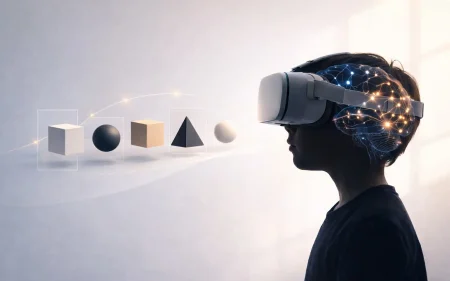
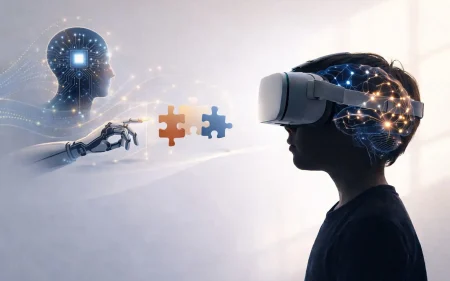
More recently, technology has entered this space, offering new tools that were not available before. Virtual Reality (VR), for example, allows children to practice skills in controlled, immersive environments where complexity can be adjusted gradually.
This shift toward technology-assisted intervention reflects a broader understanding: learning is more effective when it is engaging, structured, and meaningful.
❤️ Emotional Intelligence in Autism
Beyond cognition, one of the most important—and often misunderstood—areas in autism is emotional intelligence.
Emotional intelligence refers to the ability to recognize, understand, and manage emotions—both one’s own and those of others. It also includes empathy, social awareness, and the ability to respond appropriately in interpersonal situations.
In individuals with autism, emotional intelligence is not absent, but it often develops differently.
Research shows that many individuals with ASD experience difficulties in:
- recognizing emotional expressions
- interpreting social signals
- understanding others’ intentions
- regulating their own emotional responses
These challenges are closely linked to both executive functioning and underlying brain mechanisms.
For example, difficulties in cognitive flexibility can make it harder to interpret changing emotional contexts. Similarly, limitations in attention can affect how emotional cues are processed in real time.
🧠 Emotional Intelligence and the Brain
Emotional intelligence is deeply connected to brain systems that integrate cognition and emotion.
In autism, these systems may function differently, particularly in areas related to:
- emotion recognition
- social cognition
- self-regulation
This can lead to situations where individuals:
- feel emotions intensely but struggle to express them
- misunderstand the emotional states of others
- experience emotional overload
It is important to emphasize that these differences do not mean a lack of emotional depth. On the contrary, many individuals with autism experience rich emotional worlds but face challenges in translating those experiences into socially recognizable forms.
🌱 Can Emotional Intelligence Be Developed?
Unlike traditional IQ, emotional intelligence is not fixed. It can be developed over time through targeted interventions.
Educational and therapeutic approaches that focus on:
- self-awareness
- emotional labeling
- social scenarios
- attention training
can significantly improve emotional understanding and regulation.
Emerging approaches—such as mindfulness training, structured social skills programs, and technology-based interventions—show promising results.
In particular, structured environments that allow repetition, feedback, and gradual exposure appear to be especially effective.
🔄 A More Integrated View
Modern research suggests that emotional intelligence, executive functions, and social behavior are deeply interconnected.
Rather than treating them as separate domains, it is more accurate to view them as part of a unified system:
- Executive functions regulate behavior
- Emotional intelligence guides social interaction
- Cognitive processes support both
In autism, differences in one domain often influence the others. This is why effective intervention must address the whole system, not just isolated skills.
🧭 Looking Forward
Understanding autism requires moving beyond outdated stereotypes and focusing on the underlying mechanisms of the brain.
The current direction of research—and practice—is clear:
- more personalized interventions
- integration of technology
- emphasis on emotional and cognitive development together
This approach does not aim to “change” individuals with autism, but to support them in developing the skills they need to navigate the world more effectively.
✨ Final Thought
Autism is not simply a condition to be treated. It is a different way of experiencing and interacting with the world.
When we understand the role of executive functions, emotional intelligence, and brain development, we move closer to interventions that are not only effective—but also respectful, individualized, and meaningful.
References
Sideraki, A., & Anagnostopoulos, C.-N. (2026). Virtual reality interventions for enhancing executive functions in children and adolescents with autism spectrum disorder. Algorithms, 19(3), 201. https://doi.org/10.3390/a19030201
Drigas, A., & Sideraki, A. (2021). Emotional intelligence in autism. Technium Social Sciences Journal, 26, 80–92.
Li, C., Belter, M., Liu, J., & Lukosch, H. (2023). Immersive virtual reality enabled interventions for autism spectrum disorder: A systematic review and meta-analysis. Electronics, 12(11), 2497. https://doi.org/10.3390/electronics12112497
Borgnis, F., Baglio, F., Pedroli, E., Rossetto, F., Uccellatore, L., Oliveira, J. A. G., Riva, G., & Cipresso, P. (2022). Available virtual reality-based tools for executive functions: A systematic review. Frontiers in Psychology, 13, 833136. https://doi.org/10.3389/fpsyg.2022.833136
Diamond, A. (2013). Executive functions. Annual Review of Psychology, 64, 135–168. https://doi.org/10.1146/annurev-psych-113011-143750
Didehbani, N., Allen, T., Kandalaft, M., Krawczyk, D., & Chapman, S. (2016). Virtual reality social cognition training for children with high functioning autism. Computers in Human Behavior, 62, 703–711. https://doi.org/10.1016/j.chb.2016.04.033
Kandalaft, M. R., Didehbani, N., Krawczyk, D. C., Allen, T. T., & Chapman, S. B. (2013). Virtual reality social cognition training for young adults with high-functioning autism. Journal of Autism and Developmental Disorders, 43(1), 34–44. https://doi.org/10.1007/s10803-012-1544-6
Chaidi, I., & Drigas, A. (2020). Autism, expression, and understanding of emotions: Literature review. International Journal of Online Engineering, 16(2), 94–111.
Mitsea, E., Akrivopoulou, A., Lytra, N., & Drigas, A. (2020). Metacognition, mindfulness and robots for autism inclusion. International Journal of Recent Contributions from Engineering Science & IT, 8(2), 4–20. https://doi.org/10.3991/ijes.v8i2.14213